
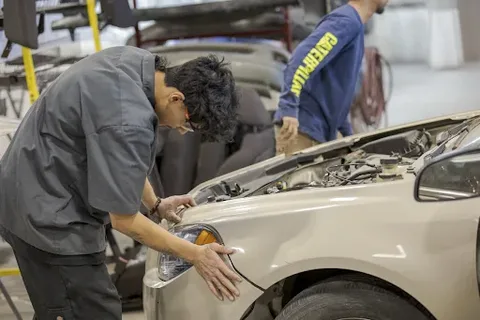
A front-end accident can damage more than an electric vehicle’s hood or fender. The impact can also affect supports and attachment points hidden behind exterior panels. Repair starts with identifying the full extent of the damage.
If your EV has front-end collision damage in Los Angeles, open an insurance claim first, then arrange a professional damage inspection. Unique Auto Collision documents the affected areas, reviews vehicle-specific procedures, and develops an insurance-based repair plan for the confirmed damage.
What Front-End Damage Should an EV Owner Have Inspected?
Direct or angled impacts can affect different areas. Arrange an assessment when you notice:
- A bent or misaligned hood. Changes in hood gaps or latching can indicate damage to hinges, supports, or nearby mounting points.
- A crumpled fender. Damage can extend to hidden mounting structures.
- Front fascia or headlight damage. Exterior damage does not reveal the condition of underlying brackets.
- Uneven front-panel gaps. Changes in spacing call for inspection.
- Warning messages after the impact. Record any new alerts so the repair team can check the affected systems against the manufacturer’s requirements.
Do not assume that a vehicle is free of hidden collision damage because its exterior panels still look aligned.
Step 1: File the Insurance Claim Before Scheduling Repairs
Unique Auto Collision handles insurance-based collision repairs. Report the accident to your insurer and get your claim number before contacting our team. Share the EV’s year, make, model, VIN, location, and damage photos. If the hood will not latch, bodywork is loose, a warning affects safe operation, or you are uncertain about the vehicle’s condition, do not drive it to the shop. Ask our team about 24-hour accident towing when arranging the inspection.
Step 2: Have the Entire Front Impact Area Assessed
Our team examines the front impact area and documents visible and concealed damage. Inspection requirements depend on the EV model and the severity and location of the collision.
Hood, Fender, and Exterior Panel Damage
We examine panel fit and mounting points to distinguish outer-panel damage from damage beneath them.
Front Supports and Concealed Collision Damage
The front reinforcement, upper supports, brackets, and structural attachment areas are checked where the impact indicates further investigation. Authorized disassembly and measurements are used when necessary to establish the actual repair scope. Not every damaged hood or fender means the underlying vehicle structure has shifted.
EV Safety and Nearby Vehicle Systems
EVs require vehicle-specific precautions around high-voltage components. Their location varies by model, so a front-end collision does not automatically mean the battery is damaged. The inspection and repair plan identify applicable safety procedures, diagnostic checks, and any related restraint or driver-assistance requirements.
I-CAR’s high-voltage safety guidance emphasizes following automaker-specific post-collision procedures, including high-voltage disablement and assessments where required.
Step 3: Review the Repair Plan for Your Electric Vehicle
The repair plan identifies which components need repair or replacement. Our electric vehicle collision repair services cover accident-related body repairs, panel alignment, refinishing, and structural work as required by the confirmed damage and insurer-approved scope.
For a damaged hood or fender, the plan can include panel replacement, approved repair procedures, attachment repairs, and color-matched refinishing. Structural work is included only when inspection confirms it. The insurer reviews the estimate and necessary supplements before work proceeds.
Does Aluminum Construction Change Front-End Collision Repair?
Some EVs use aluminum hoods or fenders; others combine different materials. Repair methods depend on the panel and manufacturer instructions.
When aluminum components are involved, our aluminum body repair service addresses the material-specific handling and repair procedures required for collision damage. Panel replacement, bonding, and approved repair techniques are determined by the vehicle’s construction and documented repair information.
Step 4: Complete the Approved Repairs and Final Checks
Following insurance approval, our team carries out the documented collision repairs. Work can include front panel repair or replacement, fitment, refinishing, and correction of confirmed support or attachment damage. Any diagnostic scans or driver-assistance calibration are identified and coordinated when required by the repair procedures.
Before delivery, we review panel fit, finish, and applicable post-repair checks. Unique Auto Collision is an I-CAR Gold Class collision center.
Front-End EV Collision Repair FAQs
Does a dented EV hood mean the front structure is damaged?
No. A dented hood alone does not confirm structural damage. An inspection checks the mounting points and supporting areas.
Is front-end EV collision repair different from repairing a gas-powered car?
Yes. EV repair planning includes vehicle-specific high-voltage safety precautions and checks alongside the required body repairs.
Will my insurance cover hidden damage found behind the front panels?
Collision-related hidden damage can be submitted as a supplement. Coverage depends on your policy and insurer review.
How long does front-end collision repair take on an EV?
Timing depends on confirmed damage, parts availability, repair procedures, and insurance approvals.
Schedule Front-End EV Collision Repair in Los Angeles
Open your insurance claim first, then contact our collision repair team with the claim number to arrange a front-end EV damage inspection in Los Angeles. We will explain the next steps for your insurance-based repair.


