
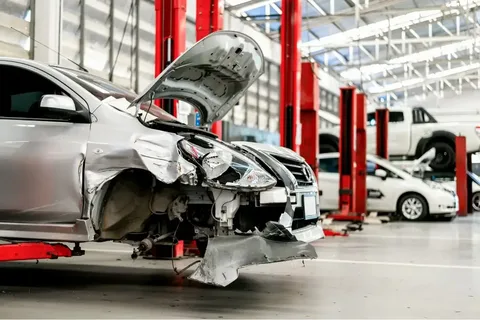
A parking-lot collision or low-speed impact can leave an electric vehicle with a scraped bumper, a loose corner, or damage near its driver-assistance equipment. The visible mark does not show whether the mounting points or nearby sensors were affected.
Schedule an EV collision damage inspection promptly after a bumper impact, especially when the impact reaches a sensor area, changes the bumper’s fit, or triggers a driver-assistance warning. An inspection establishes what was damaged before a repair plan is made.
Bumper Damage That Calls for an EV Collision Inspection
Arrange an assessment when you notice:
- A cracked, displaced, or loose bumper cover. Poor fit can indicate damaged clips, brackets, or concealed components.
- A dent or impact near a sensor location. Depending on the model, sensors or their mounts sit in or behind the bumper.
- Parking-assistance or driver-assistance alerts. A new warning calls for a check.
- A camera view or parking feature behaving differently. Blurred views or features that stop working need inspection.
- Damage that looks cosmetic but struck the bumper directly. A bumper cover can spring partly back into shape while concealed mounting components remain damaged.
These signs identify areas to inspect, not automatic sensor replacement.
Why a Small Bumper Impact Deserves a Sensor-Area Check
Depending on the model, EV bumpers are near cameras, radar, parking sensors, and other driver-assistance equipment. A collision can affect a sensor bracket or its position without leaving a large dent. Repairs to the bumper cover itself also need to respect manufacturer restrictions around sensor locations.
For example, I-CAR’s guidance on bumper cover repair with ADAS explains that vehicle manufacturers set specific restrictions for repairs near radar and ultrasonic sensors. The correct approach depends on the exact vehicle, its equipment, and the affected area. A warning light is not the only inspection trigger.
How to Book EV Bumper Collision Repair in Los Angeles
1. Open the insurance claim first. Report the accident to your insurer and obtain the claim number before contacting Unique Auto Collision. We handle insurance-based collision repairs.
2. Share the impact details. Have your EV’s make, model, year, vehicle location, and claim number available. Include bumper photos and any dashboard messages.
3. Arrange a collision damage assessment. We review the impact area and identify inspection needs. You can discuss electric vehicle collision repair in Los Angeles with us once your claim is open.
What Happens During the Bumper and Sensor-Area Assessment?
Inspection starts with the actual impact rather than a standard bumper repair checklist. Depending on the vehicle and damage, our team addresses:
- Bumper cover and attachments: checking panel fit, mounting brackets, reinforcement-related damage, and concealed collision damage where inspection is authorized.
- Sensor locations and supports: recording visible damage near cameras, parking sensors, radar units, wiring, and mounting points as equipped.
- Vehicle-specific repair information: reviewing whether the manufacturer allows a particular bumper repair or calls for replacement in the affected zone.
- Diagnostic and calibration requirements: identifying pre- and post-repair scans and coordinating required ADAS sensor calibration according to the repair plan.
- Insurance documentation: recording findings and submitting additional collision damage for insurer review when a supplement is needed.
A scratch does not prove sensor failure, and no dashboard warning does not prove a sensor is correctly positioned.
What If the Damaged Bumper Is on a Tesla?
Tesla bumper collision repair in LA starts with the impact location and the vehicle’s actual equipment. Tesla models differ in their sensors and calibration requirements.
For Tesla owners, our Tesla collision repair service focuses on accident-related body damage, appropriate inspection, and repair planning. Our I-CAR Gold Class recognition reflects our commitment to ongoing collision repair training.
Can You Keep Driving Before the Bumper Is Inspected?
A working display does not prove every affected system is intact. Avoid using driver-assistance features that appear damaged or unreliable. If the bumper is loose, lighting is damaged, warning messages affect safe operation, or the vehicle’s condition is uncertain, do not continue driving. Unique Auto Collision provides 24-hour accident towing to help arrange transport for collision assessment.
For minor visible damage, report the accident and book an inspection rather than waiting.
EV Bumper and Sensor Repair FAQs
Does every EV bumper replacement require sensor calibration?
No single rule applies to every EV. Calibration requirements depend on the model, sensor configuration, components disturbed, and manufacturer procedures. The repair plan identifies the required checks.
Can insurance include damage that was hidden behind the bumper?
Collision-related hidden damage can be added to the documented repair scope and submitted to the insurer for review. Coverage depends on the policy and insurer review.
Can EV bumper sensors be damaged without a dashboard warning?
Yes. A collision can damage sensor mounts or nearby components without triggering a warning. A collision inspection helps identify hidden damage.
How long does EV bumper and sensor collision repair take?
Repair time depends on the extent of damage, parts availability, sensor calibration requirements, and insurance approval.
Schedule Your EV Bumper Damage Inspection in LA
If your electric car has bumper damage after an accident, open your insurance claim first, then contact Unique Auto Collision with your claim number. Our team will review the damage details and help you arrange an insurance-based bumper and sensor-area collision assessment in Los Angeles.


