After a collision, it is natural to see that the vehicle still starts and assume it can make a short drive home or to a repair facility. That can be risky. A car may be able to move even when a wheel, steering component, cooling-system component, body panel, or safety system has been damaged.
Accident towing services help prevent further vehicle damage by keeping a compromised car off the road until it can be assessed. It can also protect other drivers, preserve the vehicle’s condition for inspection, and make the insurance repair process easier to document.
Not every minor contact automatically requires a tow. The key question is whether the vehicle can be moved without creating a safety risk or worsening the collision damage. When there is doubt, professional vehicle towing after an accident is the safer choice.
When should a collision-damaged vehicle be towed?
A vehicle should not be driven when the crash may have affected its ability to steer, stop, roll normally, remain securely closed, or contain fluids. Some warning signs are obvious; others are easy to dismiss in the stress of the moment.
Arrange accident towing after a collision when a wheel or tire is visibly damaged, the steering feels different, the vehicle pulls, a panel rubs a tire, the underbody drags, the hood or trunk will not latch, airbags deployed, or the car sits unevenly. Smoke, sparks, strong odors, leaking fluid, unusual heat, or electrical noises are reasons to move away and call emergency services.
A clear dashboard does not prove the vehicle is safe. Many collision problems are physical, hidden behind exterior panels, or not monitored by an instrument-panel warning.
Driving can turn limited damage into a larger repair
The force of a crash can bend, crack, loosen, or shift components without making the vehicle completely immobile. Driving then adds weight, vibration, heat, and movement to parts that may already be compromised.
A bent suspension component can place abnormal stress on a tire and its mounting points. A damaged wheel can lose air as it rotates. A loose bumper cover or underbody panel can catch the road and tear away. A cracked cooling component can leak more fluid as the vehicle heats up.
Towing removes most of those road forces. It does not repair the original damage, but it can keep a manageable collision repair from becoming more complicated before the vehicle is inspected.
Towing helps keep hidden structural damage from getting worse before inspection
Collision damage does not always stop where the vehicle was hit. Impact energy can travel through a unibody or frame structure and create indirect damage beyond the obvious dent, broken lamp, or crushed bumper. Exterior panels and trim can also hide bends, kinks, torn mounting points, and shifted reinforcements.
A roadside look cannot replace professional damage analysis. Repair planning may require controlled disassembly, structural measuring, and inspection of steering, suspension, underbody, and mounting areas. Driving before that analysis can add wear or movement and make the original damage harder to document.
Collision towing keeps the vehicle in a more stable condition for the repair facility and insurer. That documentation matters when hidden damage requires a supplement to the insurer’s first estimate.
The right towing method matters
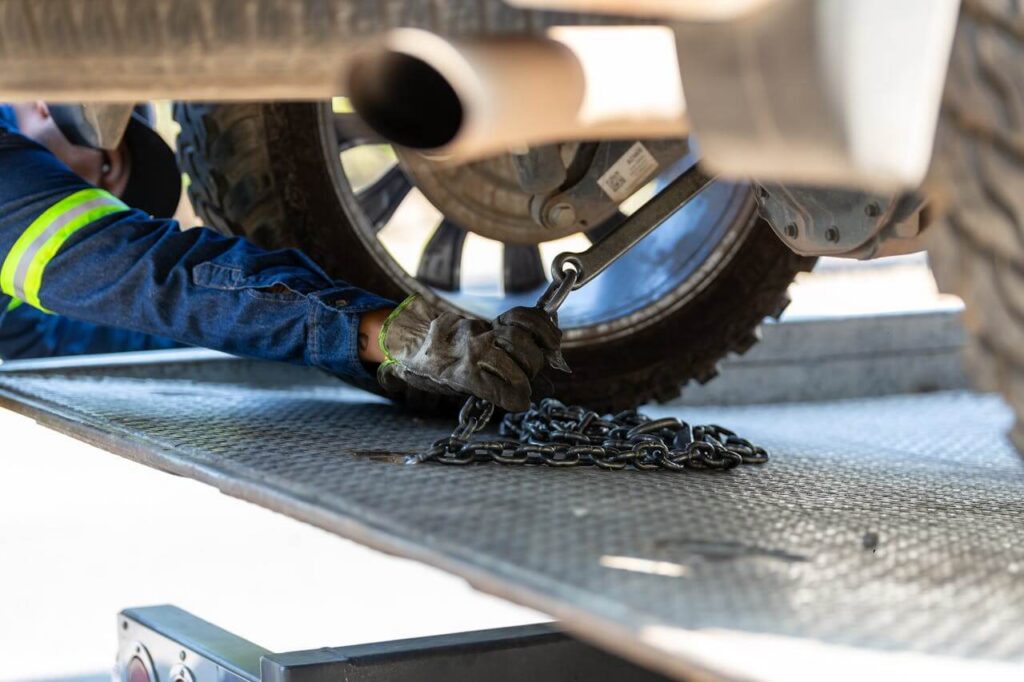
A flatbed is commonly used for collision-damaged vehicles because it can keep all four wheels off the road, but it is not a universal rule. The correct approach depends on the vehicle, the damage, available attachment points, and recovery guidance.
All-wheel-drive vehicles, electric vehicles, and cars with damaged steering or suspension may have specific transport requirements. Pulling from the wrong point or allowing a damaged wheel to rotate can create additional problems. The towing operator should select the loading method and securement points.
Before the vehicle leaves, photograph its visible condition and note the towing company, destination, and receipt. Those records can support the insurance claim.
What to do after the vehicle has been towed
Once the immediate safety issue is controlled, notify the appropriate insurance company and open the claim as soon as practical. Provide accurate accident details, photographs, the towing destination, and any receipt or storage information. Ask the representative what towing benefits or reasonable towing expenses may apply.
Obtain the claim number and representative’s contact information before the collision repair assessment. In California, an insurer may recommend a facility, but the vehicle owner has the right to choose where covered collision repairs are completed.
Tell the selected collision repair facility where the vehicle is located and share the claim information. The facility can coordinate the inspection and begin documenting the insurance-based repair without unnecessary driving.
What happens during the insurance repair assessment?
The insurer’s first estimate is often based on visible damage. A fuller inspection may find damage behind bumper covers, trim, exterior panels, reinforcements, brackets, and underbody components. The repair facility documents additional accident-related damage and submits a supplement for insurer review.
A repair plan may also include structural measurements, parts research, diagnostic scanning, and calibration requirements for the specific vehicle. These steps define what is needed to restore safety, performance, function, and appearance after the collision.
Unique Auto Collision specializes exclusively in insurance-based collision repair and holds I-CAR Gold Class recognition. The team focuses on collision damage analysis, insurer communication, repair planning, structural and body repairs, refinishing, reassembly, and final quality checks rather than routine maintenance or general mechanical service.
Frequently Asked Questions
Can I drive my car after an accident if it still starts?
Starting does not confirm that the vehicle is safe. Damage to a wheel, tire, steering or suspension component, underbody, cooling system, body panel, or sensor may not stop the engine from running. If the car handles differently, leaks, rubs, drags, shows warning signs, or has uncertain damage, arrange towing instead.
Will insurance cover towing after a collision?
Coverage depends on the policy and claim. Towing or roadside coverage may apply, and California fair-claims guidance addresses reasonable towing expenses in certain situations. Keep the receipt, tell the insurer where the vehicle was taken, and ask the claim representative what will be considered.
Should an all-wheel-drive or electric vehicle always be placed on a flatbed?
A flatbed is often appropriate because it keeps all four wheels off the road, but the right method depends on the vehicle, damage, and manufacturer’s recovery instructions. The operator should use vehicle-specific guidance and suitable attachment points.
Why can the repair estimate change after towing?
The first estimate may cover only visible damage. Disassembly, measuring, scanning, and inspection can reveal hidden structural damage, broken brackets, damaged reinforcements, wiring issues, or sensor requirements. The repair facility documents those findings and submits a supplement to the insurer.


